
Grocery cards advertise up to 6% back, but caps and annual fees change the math. Here is how to figure out which kind of card actually earns you more.

Groceries are the one bill almost everyone has, and it is one of the few that keeps climbing no matter how carefully you shop. So it is no surprise that card issuers love to advertise big grocery rewards, with numbers like 6% back that sound almost too good to be true. Sometimes they really are that good. Other times the fine print quietly turns a flashy offer into something worse than a plain old flat-rate card. This guide walks through how grocery cards work, where the catches hide, and how to run the math for your own household in about five minutes.
A grocery rewards card pays a higher rate of cash back or points when you spend at U.S. supermarkets. A typical offer looks like 6% back at supermarkets on up to $6,000 per year, then 1% after that. Some cards pay a smaller rate with no cap, such as 3% on groceries all year. Others rotate categories every quarter, which means groceries only earn the bonus rate for a few months at a time.
Two words matter here. A cap is the maximum amount of spending that earns the bonus rate. Once you hit it, the rate drops, often to 1%. An annual fee is a yearly charge just for holding the card, and many of the richest grocery cards charge one after the first year. Both of these decide whether a card is a bargain or a bust.
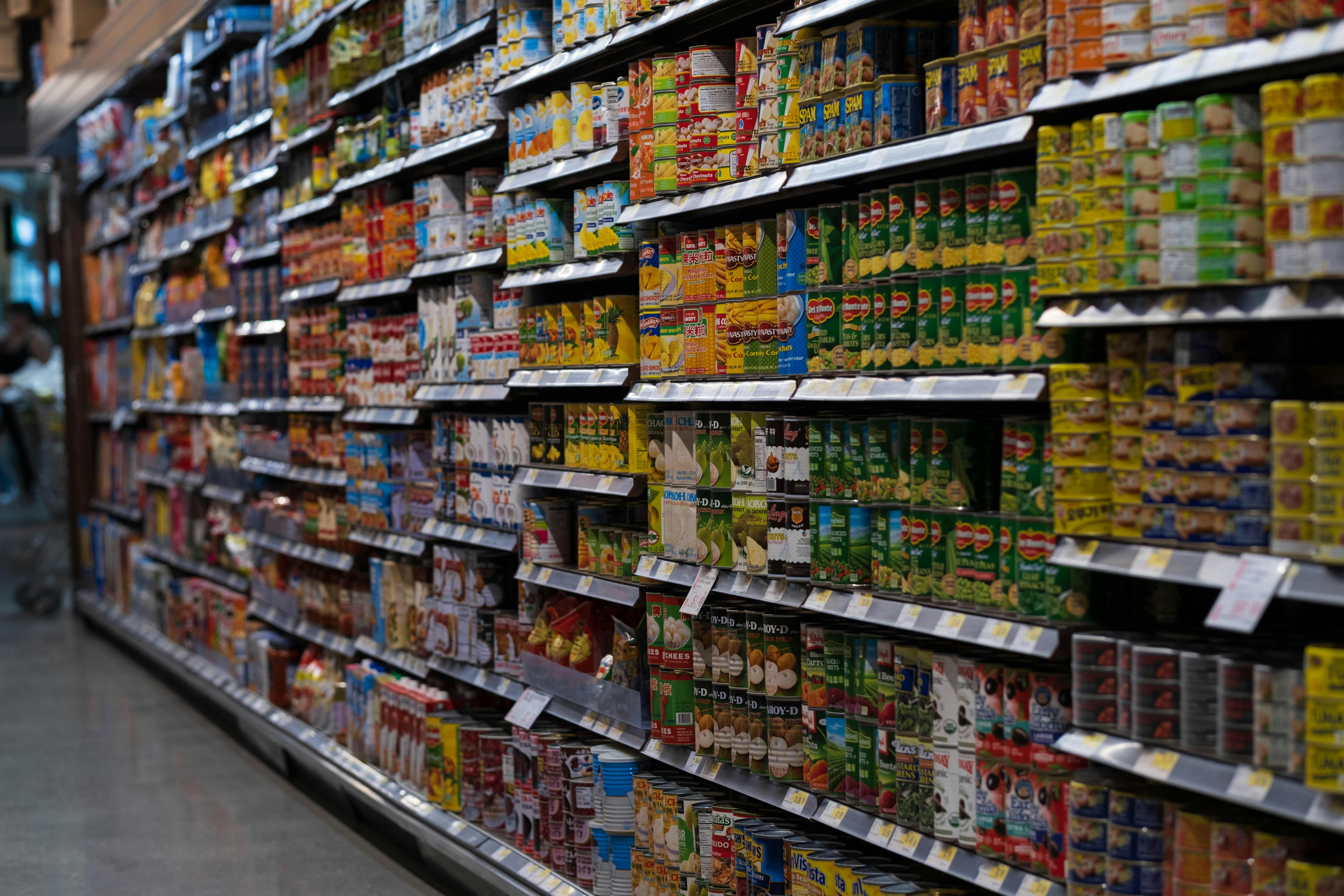
This is where people get tripped up. Card issuers use merchant category codes, which are short numbers that tell the card network what kind of business took your payment. A store has to be coded as a supermarket for the bonus rate to apply. Many big-box retailers, warehouse clubs, and delivery services are coded differently, so a purchase there may earn only 1%.
Before you commit to a card, read its definition of groceries. Check whether it covers the stores you really use, whether online grocery orders count, and whether pickup and delivery fees are included. If you do most of your shopping at a warehouse club, our breakdown of Warehouse Club Math: Is a Costco or Sam's Club Membership Worth It in 2026? shows why a membership can change which card makes sense.
Most grocery decisions come down to three types of cards.
The first is the high-rate card with an annual fee. It pays something like 6% on groceries up to a cap, and it charges around $95 per year. It rewards big grocery budgets.
The second is the no-fee grocery card. It might pay 3% on groceries with no cap. The rate is lower, but you keep every dollar and never worry about hitting a ceiling. You can browse options on our no-annual-fee cards page.
The third is the flat-rate card. It pays the same rate, usually 2%, on everything. It is simple, and it earns on the purchases the other cards ignore. Our cash back cards page lists several of these.
Let's make this concrete with two fictional shoppers.
Priya feeds a family of four and spends $800 a month on groceries, which is $9,600 a year. With a 6% card that has a $6,000 cap and a $95 fee, she earns 6% on the first $6,000, which is $360. The remaining $3,600 earns 1%, which is $36. That is $396 in rewards. Subtract the $95 fee and she nets $301. A flat 2% card would pay her $192 on the same spending, and a 3% no-fee card would pay $288. So for Priya, the fee card wins, but only by $13 over the no-fee option.
Dan lives alone and spends $150 a month on groceries, or $1,800 a year. The 6% card pays him $108, but after the $95 fee he nets just $13. The flat 2% card pays $36. The 3% no-fee card pays $54. For Dan, the no-fee 3% card wins comfortably, and the flashy 6% card is the worst choice on the table.
The lesson is that the break-even point matters more than the headline rate. In this example, the fee card only beats the no-fee card once annual grocery spending is high enough to cover the extra fee, which here is around $3,000 to $3,500 a year.
A grocery card only earns its keep on groceries. Your gas, dining, bills, and online shopping earn the base rate, which may be only 1%. Many households end up pairing a grocery card with a flat-rate card for everything else. That works well if you are comfortable tracking two cards. If you prefer one card for everything, a flat 2% card is usually the lowest-effort choice. For a broader look at how reward types differ, see Credit Card Rewards Explained: Points vs Miles vs Cash Back.
Chasing the rate and ignoring the cap. A 6% rate on $6,000 is worth $360, but if you spend $3,000 a year you will never use the cap's full value, and the annual fee will eat most of your gain.
Assuming every store counts. Warehouse clubs, big-box stores, and some delivery apps may be coded as something other than groceries. Check before you rely on the bonus.
Letting rewards drive spending. If you buy extra snacks to "earn more," you are losing money. Rewards are a discount on what you already spend, not a reason to spend more.
Carrying a balance. Credit card interest rates commonly run above 20%. One month of interest can wipe out a year of grocery rewards. If you ever carry a balance, pay it down first, and consider a 0% APR card rather than chasing rewards.
Forgetting to review after the first year. Many fee cards waive the fee for year one. When it comes back, redo the math. If the card no longer wins, downgrade to a no-fee version rather than cancelling outright.
Add up the last three months of grocery spending from your bank and card statements, then multiply by four for a yearly estimate.
Check which stores you actually use and confirm they count as groceries for each card you are considering.
Calculate net rewards for each card: rewards earned, minus the annual fee.
Compare against a flat 2% card as your baseline. If a grocery card can't clearly beat it, skip the complexity.
Set up autopay for the full statement balance so you never pay interest.
Revisit the numbers once a year, or whenever your household size changes.

Grocery rewards cards can be a real money-saver for households with big food budgets, and the best ones are worth the annual fee. But the best card is a matter of arithmetic, not marketing. Run the numbers using your actual spending, compare against a simple flat-rate card, and pick the one that nets you the most after fees. If you are still deciding, browse our rewards cards page to compare options side by side.
This article is for general educational purposes only and is not financial advice. Card terms, rewards rates, and fees change often, so confirm current details with the issuer before applying. Individual results will vary.
Join the newsletter your bank hates and your wallet loves.
No spam. Unsubscribe anytime.