
Coupon apps save you 5-8% on your grocery bill. A grocery price book saves you 15-25% on the same exact food — by exposing which store, which week, and which size is actually cheapest. Setup takes 3 weeks. Then it runs forever.

The average American household spends just over $1,000 a month on groceries. Most pay 15-25% more than they need to — not because they're shopping at expensive stores, but because they don't know where the prices actually are. The same gallon of milk varies by $1.20 across the four stores within 10 miles of most homes. The same box of cereal varies by $2-3. Multiply across 60 weekly grocery items, and you're looking at $150-200 a month hiding in plain sight.
Coupon apps catch maybe a quarter of it. A grocery price book catches the rest.

A price book is a personal record of what each item you regularly buy costs at each store you regularly shop at, including sale frequency and best-price thresholds. It's the simplest possible tool — a spreadsheet — but it's the only way to actually know whether $3.49 for a pound of ground beef is a deal or a rip-off.
Coupon apps tell you what's on sale this week. A price book tells you whether this week's sale price is actually a good price, or whether the same item routinely drops 30% lower at a different store every six weeks.

Don't change a thing about how you shop. Just save every receipt for one full week. At the end of the week, log each item into your spreadsheet with:
Item name
Store
Quantity / size
Price paid
Unit price (price ÷ ounces or count)
The unit price is the key column. A 32-oz jar of peanut butter at $5.99 isn't comparable to a 16-oz jar at $3.49 until you convert both to price per ounce.
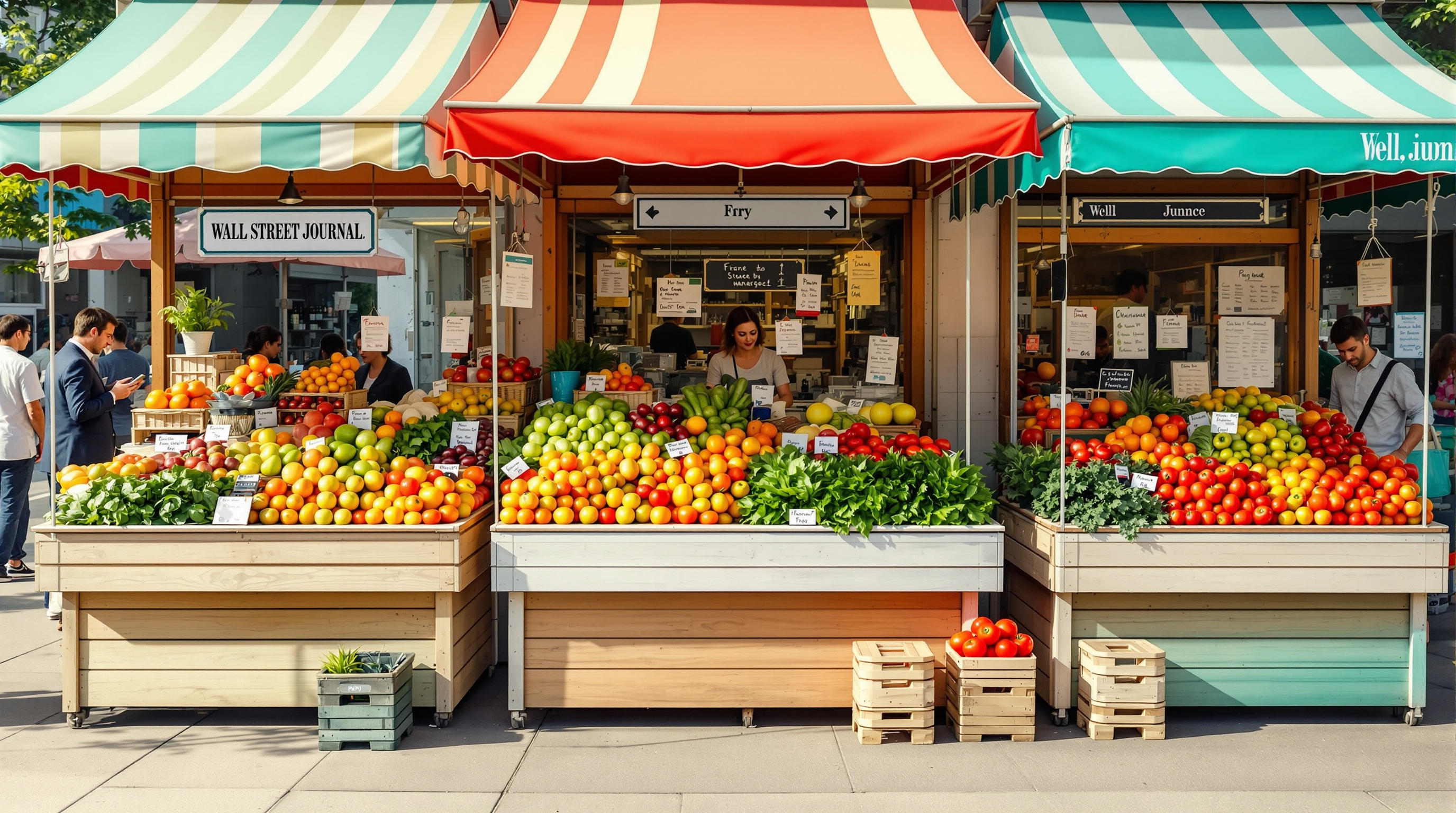
Pick the three stores most likely to win different categories — typically a warehouse club (Costco, Sam's), a discount grocer (Aldi, Lidl, Trader Joe's, Walmart), and a traditional supermarket (Kroger, Safeway, Publix, etc.).
Walk through with your phone. For each of the 30 staples on your list (see below), record the unit price. Don't buy anything you don't need — this is a recon trip.
If you can't physically visit, use the stores' apps or websites. Most chains now show pricing online, including sale prices.

After two weeks of data, the winners reveal themselves. Almost always:
Costco/Sam's: lowest unit price on bulk staples — paper goods, frozen meat, cheese, nuts, olive oil
Aldi/Lidl: lowest unit price on dairy, eggs, basic produce, snacks, bread
Traditional supermarket: wins only on rotating sale items (their loss-leader strategy)
Target/Walmart: mid-tier across most categories, occasionally beats on packaged goods
Now you have a baseline best-price for each item. Anything 10%+ above your baseline is a "skip." Anything 20%+ below your baseline is a "stock up."
Don't try to track 200 items. The 80/20 of grocery spending is concentrated in roughly 30 SKUs that most households buy regularly. Focus there:
Dairy/Eggs: milk, eggs, butter, plain yogurt, cheddar, parmesan
Proteins: ground beef, chicken breasts, chicken thighs, bacon, deli turkey
Pantry staples: olive oil, all-purpose flour, sugar, rice, pasta, canned tomatoes, peanut butter, oats
Produce: bananas, apples, onions, potatoes, garlic, carrots, frozen mixed berries
Bread/Tortillas: sandwich bread, tortillas
Beverages/Snacks: coffee beans, seltzer, almonds, household-favorite snack
Cleaning/Paper: toilet paper, paper towels, dish soap, laundry detergent
That's roughly 32 items. Skip the rest. Tracking specialty items burns time for low impact.
Your weekly grocery shop becomes a 10-minute exercise:
Plan meals based on what's on sale (most chains email weekly ads — sign up).
Match each item on your shopping list to the store with the lowest current price.
Hit two stores max per week.
Update your spreadsheet only when you see a new low or new high — not every shop.
Sale-cycle awareness. Most chains rotate the same items in and out of sale on a 4-6 week cycle. After 8 weeks of tracking, you'll know when ground beef goes 30% off at Kroger (usually first week of the month) and when chicken thighs hit $1.99/lb (usually mid-month).
Stock-up thresholds. For each item, define a "buy in bulk and freeze/store" price. Example: ground beef under $3.99/lb → buy 5 lbs and portion-freeze.
The "never pay full price" list. Some items go on sale so reliably that paying full price means you weren't paying attention. Examples: cereal, pasta sauce, frozen vegetables, deli meat, soda, cookies.

Sarah and Tom Martin (Phoenix, $920/month grocery spend before) built a price book over three weeks in 2024. Six months in:
Switched dairy purchases entirely to Aldi (was 60% Safeway): $32/mo savings
Switched paper/cleaning to Costco bulk runs every 8 weeks: $28/mo savings
Stock-up freezing of meat at sale prices: $74/mo savings
Reduced "specialty" impulse buys by 60% (the price book made them visible): $54/mo savings
Skipped traditional supermarket entirely except for weekly loss leaders: $27/mo savings
Total monthly savings: $215. Annual: $2,580. Time invested: 3 weeks setup + 15 minutes/week ongoing.
Tracking too many items. The 30-staples rule exists because diminishing returns kick in fast. If you start tracking specialty cheeses, you'll abandon the system within a month.
Ignoring unit prices. "It's $4.99 and that's cheaper" is a trap. The 12-oz size at $4.99 vs. the 16-oz size at $5.99 is a 20% premium per ounce.
Driving 25 minutes to save $3. Two stores max per week. Beyond that, gas + time wipe out the savings.
Forgetting to update the price book. Prices drift. Quarterly update of the baseline best-prices keeps the system accurate.
Letting one bad week derail the system. Some weeks you'll pay above your baseline because nothing's on sale. Annual averages are what matter.
This week: Save every receipt. Set up the spreadsheet with columns: item, store, size, price, unit price.
Next 2 weeks: Visit (or browse online) your three closest grocery stores. Record unit prices on the 30 staples.
Week 4: Identify the winning store per category. Start matching weekly shopping lists to those stores.
Ongoing: 15 minutes a week. Quarterly: full re-baseline.
The price book is unglamorous. It's also one of the few personal-finance tactics where the savings rate (15-25% on a recurring expense) and the time investment (one afternoon a week, then 15 minutes) genuinely favor the person doing it. The average household leaves $1,500-2,500 a year on the table because they don't know where the prices are. Three weeks of work fixes that, permanently.
Join the newsletter your bank hates and your wallet loves.
No spam. Unsubscribe anytime.