
Ever been shocked when a purchase didn't earn the bonus rewards you expected? Merchant category codes are the hidden labels deciding what your card pays, and here's how to work with them.

You swipe your card at a warehouse store that sells groceries, expecting 4% back at supermarkets. A month later, your statement shows a measly 1%. Nothing is broken, and nobody made a mistake. You just ran into one of the least-talked-about parts of credit card rewards: the merchant category code.
Understanding these little four-digit codes won't turn you into a points wizard overnight, but it will stop the "why didn't I get the bonus?" frustration. Let's walk through what they are, who picks them, and how to use them to your advantage.
A merchant category code, usually shortened to MCC, is a four-digit number that tells the payment networks what kind of business a merchant is. Think of it as a label stuck on a store by the payment system. Restaurants get one code, gas stations get another, and airlines get yet another.
Here's the key thing: your card issuer doesn't look at what you bought. It looks at the code attached to the merchant. If a store is coded as a "department store," every purchase there is treated as a department store purchase, even if you bought a sandwich. That's why a pharmacy might count as a drugstore for rewards while the same chain's gas pump might be coded as a gas station.
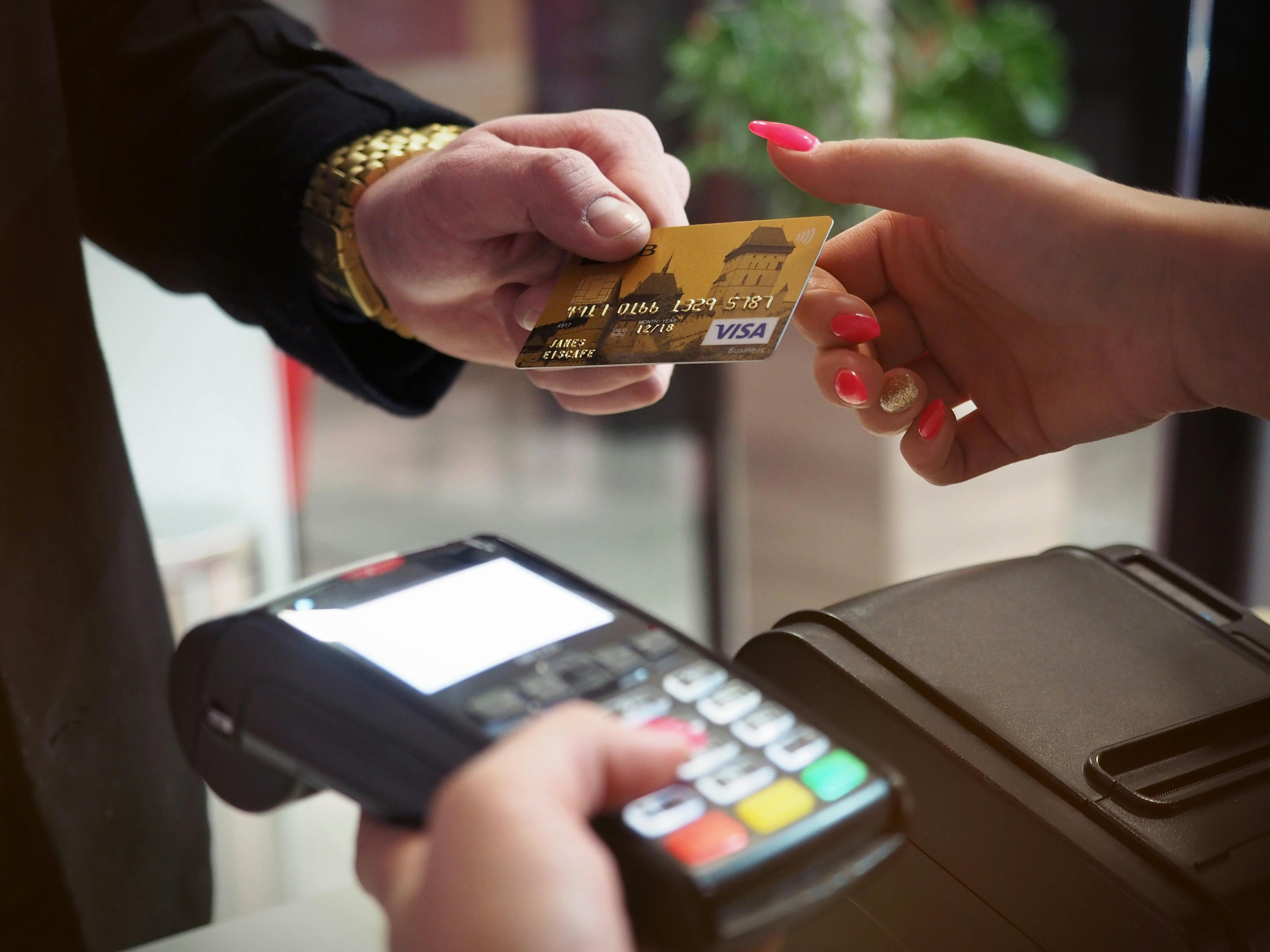
The merchant doesn't pick its own code on a whim, but it also isn't chosen by your card issuer. When a business sets up payment processing, its processor or acquiring bank assigns a code based on the business's main line of work. Visa, Mastercard, and the other networks publish the list of codes, but the assignment happens at sign-up.
That means a few things. A business with several lines of work gets just one code. Companies can be recoded when they change what they sell. And two stores that feel identical to you can have different codes if they signed up with different processors.
Most bonus categories on cards are defined by codes. "Dining" usually means restaurants, fast food, and bars. "Groceries" usually means supermarkets, and often excludes superstores and warehouse clubs. "Gas" generally means actual gas stations, not the fuel pump at a big-box retailer.
Common surprises include:
Warehouse clubs and superstores often are not coded as grocery stores, even though you buy groceries there.
Food delivery apps may be coded as the app's business, not as a restaurant, though many cards add special delivery bonuses.
Airline and hotel purchases made through a third-party booking site often code as the booking site, not the airline or hotel.
Streaming services sometimes get their own code and sometimes get lumped in with general digital goods.
Issuers also publish their own fine print about what counts, so the card's terms always win over your assumptions.
Meet Priya and Marcus, a couple who spend about $900 a month on food. Priya holds a card that pays 4% on groceries and 1% on everything else. Marcus has a flat 2% card.
They assume all their food spending earns 4% on Priya's card. Here's what their month really looks like:
$500 at a regular supermarket, coded as grocery: 4% = $20
$250 at a warehouse club, coded as a wholesale club: 1% = $2.50
$150 on a delivery app, coded as a general digital merchant: 1% = $1.50
Priya's card earns $24 on the $900, not the $36 they expected. If they'd put the warehouse club and delivery spending on Marcus's 2% card, they'd have earned $20 + $5 + $3 = $28. That's $4 more per month, or $48 a year, just for sorting purchases onto the right card.
It's not life-changing money, but it's free money. And with larger spending categories like travel, the gap can be hundreds of dollars.
You don't have to guess. A few easy habits go a long way:
Read your issuer's bonus category page. Most list exactly which types of merchants count, and which are excluded.
Check recent statements. After a purchase posts, your app or statement often shows the category it was classified under.
Search the merchant's name plus "MCC." Fellow cardholders have usually already tested it.
Do a small test purchase at a new merchant before relying on it for a big one.
If you're building a setup around rotating bonuses, our guide to rotating category credit cards shows how to track which categories apply each quarter.
Once you know codes drive rewards, you can think of your wallet as a toolbox. A flat-rate card is your catch-all for anything that's miscoded or doesn't fit. A cash back card with strong grocery and dining categories handles your everyday purchases. A travel rewards card handles flights and hotels booked directly.
If you're just getting your head around the differences between points, miles, and cash, start with Credit Card Rewards Explained: Points vs Miles vs Cash Back. It makes the rest of this much easier to follow.
You can also browse the full set of rewards credit cards to compare how different cards define their bonus categories.

Gas is a classic example of codes confusing people. A card that pays 3% on gas typically means purchases coded as service stations. Pay at the pump of a supermarket or warehouse club and it may be coded differently, depending on how the retailer set things up. Electric vehicle charging has its own wrinkles, too. Before you build a habit around a gas bonus, read Gas Rewards Apps and Cards in 2026: The Real Math on Saving at the Pump.
The same caution applies to utilities, rent, and government payments, which often come with their own codes and sometimes have processing fees or are excluded from rewards altogether.
Assuming the product you bought decides the category. The merchant's code decides, not your shopping cart.
Chasing a bonus category without reading the exclusions. The "includes" and "excludes" lists are where the truth lives.
Skipping the flat-rate fallback. Using a bonus card for everything outside its categories often leaves rewards on the table.
Getting frustrated and calling customer service. Issuers generally can't recode a merchant for you, so a call rarely changes the outcome.
Forgetting that codes can change. A merchant that earned 5% last year may be coded differently today.
List your top five spending categories and what you spend in each each month.
Read the bonus category definitions and exclusions for each card you own.
Review your last two statements and note which purchases earned less than expected.
Assign each type of spending to the card that rewards it best, with a flat-rate card as your fallback.
Re-check every few months, since codes and bonus terms can change.
Credit card rewards aren't determined by what you buy, but by how the merchant is labeled behind the scenes. Once you understand merchant category codes, those surprise 1% purchases make sense, and you can steer your spending toward the card that actually pays. A little homework now means more rewards later, with no extra spending required. For more ways to compare cards, head to our credit card hub.
This article is for general educational purposes only and is not financial, legal, or tax advice. Card terms, rewards, and category definitions change often, so always confirm details with your card issuer before making decisions.
Join the newsletter your bank hates and your wallet loves.
No spam. Unsubscribe anytime.