
You can put your tax bill on a credit card, but the processing fee is steep. Here's how to tell whether the rewards or a sign-up bonus actually make it worthwhile.

Nobody enjoys writing a big check to the IRS, and some people wonder whether they could at least get something back for it, like points, miles, or a sign-up bonus. The good news is that you can pay federal taxes with a credit card. The less good news is that the government doesn't absorb the cost of accepting your card. A third-party payment processor does, and it passes that cost along to you as a fee. Whether paying this way is smart or silly comes down to simple math, and we'll walk through it step by step.
The IRS doesn't take credit cards directly. Instead, it works with approved payment processors. You pick one, enter your tax details and card number, and the processor charges your card and sends the payment to the IRS. For this service, the processor charges a fee, usually somewhere around 1.75% to 2.5% of the payment. Debit card payments generally carry a small flat fee instead.
That percentage is the number to remember. Fee rates change, so always check the current rate on the processor's site before you pay. Plan on the fee being the price of admission, and then ask whether what you get back is bigger than what you pay.
Most everyday cards earn between 1% and 2% back on general purchases. If the processor fee is around 1.9% and your card earns 1.5%, you're losing 0.4% on every dollar. On a $5,000 tax payment, that's a $20 loss, plus you may owe interest if you don't pay the card off. So on rewards alone, paying taxes by card usually doesn't win. To learn how different reward types compare, see Credit Card Rewards Explained: Points vs Miles vs Cash Back.
There are only a few situations where it flips: when you're chasing a sign-up bonus, when your card earns a high rate on all spending, or when you need short-term breathing room before a due date.
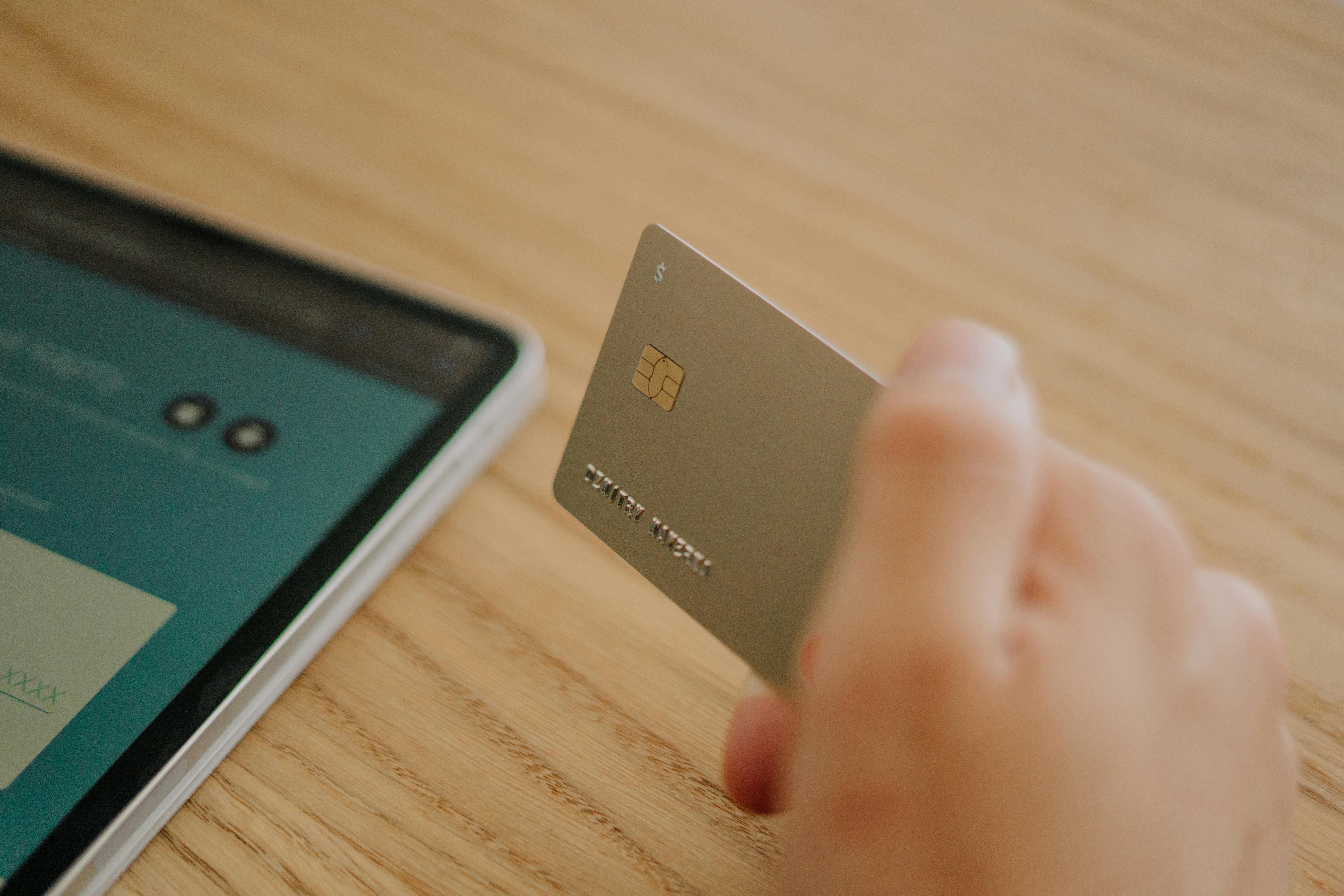
This is the most common winning scenario. Many new cards offer a bonus after you spend a set amount in the first few months, often $3,000 to $6,000. If you're already going to owe a large tax bill, putting it on the new card can knock out that minimum spend in a single transaction. The bonus can be worth several hundred dollars, which can easily exceed the fee.
The key word is "already." Never open a card and spend money you wouldn't have otherwise spent just to earn a bonus. We cover this idea in detail in Credit Card Sign-Up Bonuses Explained. Also check the bonus terms, since some cards exclude certain transactions from counting toward the spending requirement, and processor payments can be treated as cash-like purchases by some issuers.
Let's look at two fictional neighbors, Priya and Marcus, who each owe $6,000 in estimated taxes this quarter.
Priya has a card earning 2% back on everything. The processor fee is 1.9%. She would earn $120 in rewards and pay $114 in fees, for a net gain of $6. That's barely worth the effort, and she's better off paying from her bank account.
Marcus just opened a new card with a $250 bonus after $3,000 in spending in three months, and the card earns 1.5% back. His fee on $6,000 is $114. His rewards are $90 for the 1.5% earn plus the $250 bonus, so $340 total. Net gain: $226. Because he had the tax bill anyway and will pay the card off in full next month, this works well for him.
Notice the difference. Priya's math was almost break-even. Marcus's worked because of the bonus. The tax payment wasn't magic. The one-time bonus made the fee worth paying.
Sometimes the real reason to use a card is timing. If your tax payment is due on a Monday and your paycheck lands on Friday, a card can give you a grace period. With a card that has a 0% introductory APR on purchases, you could even spread the payment across several months without interest. The catch is that the processor fee is still charged upfront, and you must repay the balance before the intro period ends.
Still, be careful. The IRS also offers installment agreements, and those often cost far less than credit card interest, which can run above 20% APR in 2026. If you're considering a card because you truly can't afford the payment, the IRS payment plan is usually the cheaper route. Understanding how interest piles up matters here, and How Credit Card Minimum Payments Are Calculated shows how quickly a balance can linger.
Federal income tax isn't the only option. Many states, counties, and cities accept cards for income tax, property tax, and vehicle registration, and their fees vary. Some charge a flat fee, some a percentage, and a few charge nothing. It's worth checking your local government's website before assuming the fee is the same everywhere.
Property taxes are a common example. A homeowner with a $4,000 property tax bill might pay a 2.3% fee, or $92. That only makes sense if the card rewards or bonus exceed it.
The biggest mistake is ignoring the fee and assuming that any rewards are free money. They aren't. You're paying to earn them, so you need to compare the two numbers every time.
Another mistake is carrying the balance. If you earn $100 in rewards and then pay $150 in interest, you've lost. Pay it off fast or don't do it at all.
A third mistake is spending to hit a bonus you can't afford. A tax bill you already owe is fine to use for this. A bill you have to stretch to cover is not.
Finally, people forget about credit utilization. A large tax payment can push a card close to its limit, which may temporarily lower your credit score even if you pay it off promptly. If your score matters this month because you're applying for a mortgage or auto loan, think twice.
First, find your exact tax amount and due date. Second, look up the processor's current fee on the IRS payment page and compute the dollar cost. Third, work out your card's rewards on that spend, including any bonus. Fourth, only proceed if the gain is clearly positive and you can pay the card off in full. Fifth, save the confirmation number and keep it with your tax records in case of any dispute.
If you want to compare cards for this purpose, browse our rewards credit cards or 0% APR cards and look for a strong bonus with a reachable spending target.
For most people, paying taxes with a credit card costs more than it earns. The exceptions are a new-card sign-up bonus you'd otherwise have to work to reach, or a genuine need for a short cash-flow bridge with a plan to repay. Run the numbers before you click pay, and treat the processor fee as a real cost. If the math clearly works, go ahead. If it's close, keep it simple and pay from your bank account.
This article is for general educational purposes only and is not financial, tax, or legal advice. Processor fees, card terms, and tax rules change, so verify current details and consult a qualified professional about your situation.
Join the newsletter your bank hates and your wallet loves.
No spam. Unsubscribe anytime.