
Most major credit cards now let you split a big purchase into fixed installments without applying for a new loan. Here's how issuer-run installment plans actually work, and when they beat carrying a balance.

You already have a card in your wallet that can turn a $1,800 laptop into four painless payments of $450 — no new application, no hard credit pull, no separate loan. It's called an issuer-run installment plan, and there's a good chance your existing credit card already offers one. Amex calls it Plan It. Chase calls it My Chase Plan. Citi calls it Citi Flex Pay. They all do roughly the same thing: take a purchase you already made (or are about to make) and break it into equal payments with a flat fee instead of compounding interest.
Most people never notice this feature because card issuers don't advertise it loudly — it eats into the interest income they'd otherwise collect if you carried a balance the normal way. But if you're weighing a big purchase against a buy now, pay later app, or wondering whether a new balance transfer card is worth opening just to spread out a purchase, it's worth understanding what's already sitting in your existing wallet.
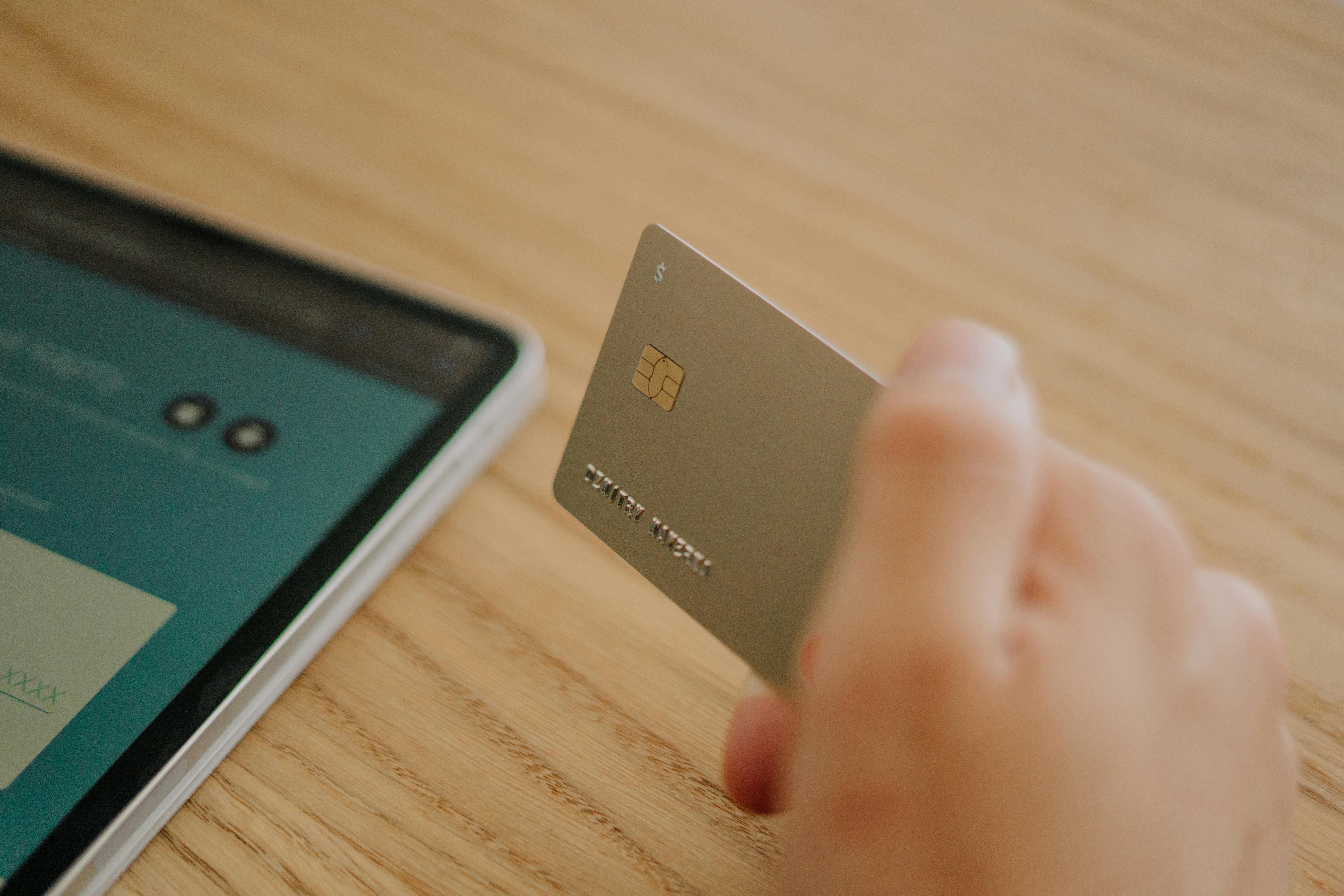
When you use a card's built-in installment feature, the issuer takes an eligible purchase (or sometimes your entire statement balance) and converts it into a fixed number of monthly payments, usually anywhere from 3 to 24 months. Instead of a variable APR that compounds daily, you're charged either a flat monthly fee or a fixed "plan APR" that's locked in for the life of the plan. That fixed payment then shows up on your statement every month until it's paid off, separate from your regular purchases.
The mechanics differ slightly by issuer. Amex Plan It lets you select eligible purchases of $100 or more after they've posted and convert them into a plan with a flat monthly fee based on your card, spending, and plan length. My Chase Plan works similarly, letting you pick a purchase of $100 or more and spread it over 3, 6, 12, or 18 months for a fixed monthly fee. Citi Flex Pay goes a step further and lets you create a plan for either a specific purchase or a chunk of your existing balance, with a fixed APR disclosed upfront. None of these require a credit check beyond what you already went through to get the card, because you're not borrowing new money — you're restructuring debt you already agreed to.
The entire pitch of an installment plan is predictability. If you put a $2,400 dental bill on a card with a 24.99% variable APR and only make minimum payments, you could be paying it off for years and handing over a few hundred dollars in interest along the way, with the total shifting depending on rates and how much you pay each month. An installment plan fixes the fee at the outset — you know exactly what you'll pay in total and exactly when the balance hits zero, which makes budgeting dramatically simpler.
It also doesn't touch your ability to use the rest of your credit line the way you might expect. In most cases, the amount you convert to a plan is set aside from your regular balance, but the fee (not the full amount) counts against your utilization in a more favorable way than an equivalent revolving balance would, which can help if you're trying to protect your credit score while carrying a big expense.

The flat fee is not free money — it usually works out to an effective APR somewhere between 8% and 20%, depending on the issuer, your creditworthiness, and how many months you choose. That's often cheaper than a card's standard purchase APR, but it's rarely as cheap as a true 0% APR promotional offer on a new card, so if you have strong credit and can qualify for an intro-APR card, that route may still save you more.
Once you commit to a plan, most issuers charge an early payoff fee or simply don't refund the remaining plan fee if you pay it off ahead of schedule, so there's little upside to enrolling if you're fairly sure you'll pay the balance off in a month or two anyway. And because these plans are managed inside your existing card, missing a plan payment can trigger the same late fees and credit reporting consequences as missing any other credit card payment.
Damon, a 34-year-old contractor, needed a $3,200 industrial sewing machine for a side project fixing up furniture for resale. He already carried a Chase card with a $10,000 limit and a 22.99% variable APR. Rather than open a new card or dip into savings, he used My Chase Plan to convert the purchase into a 12-month plan with a $19-per-month fixed fee, for a total of $3,428 paid over the year.
His friend Priya faced a similar decision when her laptop died before a big freelance deadline. She had a Citi card and used Citi Flex Pay to break a $1,600 replacement into an 18-month plan at a locked 14.99% fixed APR, landing her monthly payment at $103 and total interest around $254. Both Damon and Priya knew their exact end date and exact total cost from day one — something neither would have gotten by just carrying the balance and paying whatever they could each month.
One mistake is treating installment plans as a green light to spend more than you'd otherwise put on a card, simply because the fixed payment feels manageable. The fee is still a cost, and stacking multiple plans across several purchases can quietly add up to a large recurring monthly obligation.
Another is not comparing the plan's effective APR to other options before enrolling. Some people convert a purchase the moment it posts without checking whether a no-annual-fee card with a promotional 0% period, or simply paying it off over two or three billing cycles at the card's regular rate, would actually cost less.
A third is forgetting that these plans still count as debt for the purposes of a mortgage or auto loan application. Because the fixed monthly payment shows up as a separate line item on your statement, some lenders factor it into your debt-to-income calculation just like a personal loan payment.
Check your card issuer's app or online account for "Plan It," "My Chase Plan," "Flex Pay," or similar wording under recent transactions — most issuers only show the option next to purchases over $100 that posted within the last 12 months.
Compare the disclosed fee or fixed APR against your card's standard purchase APR and against any 0% intro offers you could qualify for elsewhere, so you know the plan is actually the cheapest path before you commit.
Pick the shortest plan length you can comfortably afford, since longer plans almost always carry a higher total fee even though the monthly payment looks smaller.
Avoid running more than one or two active plans at a time, and keep a running list of their end dates so you're not caught off guard by several fixed payments landing in the same month.
Issuer-run installment plans are one of the more useful features hiding in plain sight inside a credit card most people already carry. They won't beat a genuine 0% APR promotion, and they're not a substitute for paying down debt aggressively when you can, but for a large one-time purchase you need to spread out, they offer a fixed, predictable cost that a revolving balance simply can't match. Check what your issuer already offers before you reach for a new card or a third-party BNPL app.
This article is for general informational purposes only and does not constitute financial advice. Fees, APRs, and eligibility for installment plans vary by issuer and by individual account; check your card's current terms before enrolling in any plan.
Join the newsletter your bank hates and your wallet loves.
No spam. Unsubscribe anytime.