
Rent is most people's biggest monthly bill, so putting it on a credit card sounds like a rewards jackpot. Here's the simple math that tells you whether the processing fee wipes out the points.

For most renters, the rent check is the single biggest payment of the month — often a third of take-home pay or more. So it's natural to wonder: if I'm already charging groceries and gas to a rewards card, why not put the biggest bill of all on there too? A $2,000 rent payment every month is $24,000 a year of spending. On paper, that looks like a mountain of points.
The catch is that most landlords and property managers don't eat the cost of card processing. They pass it on to you as a "convenience fee," and that fee is usually bigger than the rewards you'd earn. But not always. There are specific situations in 2026 where paying rent by card is a smart move, and plenty where it quietly costs you money. This guide walks through the math in plain language so you can tell which camp you're in.
There are three common ways renters end up paying rent with plastic:
Your landlord's own portal accepts cards. Many larger apartment complexes use online payment portals that take credit cards but tack on a processing fee, often around 2.5% to 3.5% of the payment.
A third-party payment service. These companies charge your card, then send your landlord a check or bank transfer. You pay the service a fee — again, usually in the 2.5% to 3% range.
A rent-rewards program or card built specifically for rent. A handful of card products and rent platforms let you pay rent with no fee (or a much smaller one) and still earn points. These are the exception, not the rule, and their terms change often, so read the current fine print before you count on them.
The key thing to understand is that a "fee" and a "reward" are both percentages of the same payment. If the fee percentage is higher than the reward percentage, you lose money on every payment.
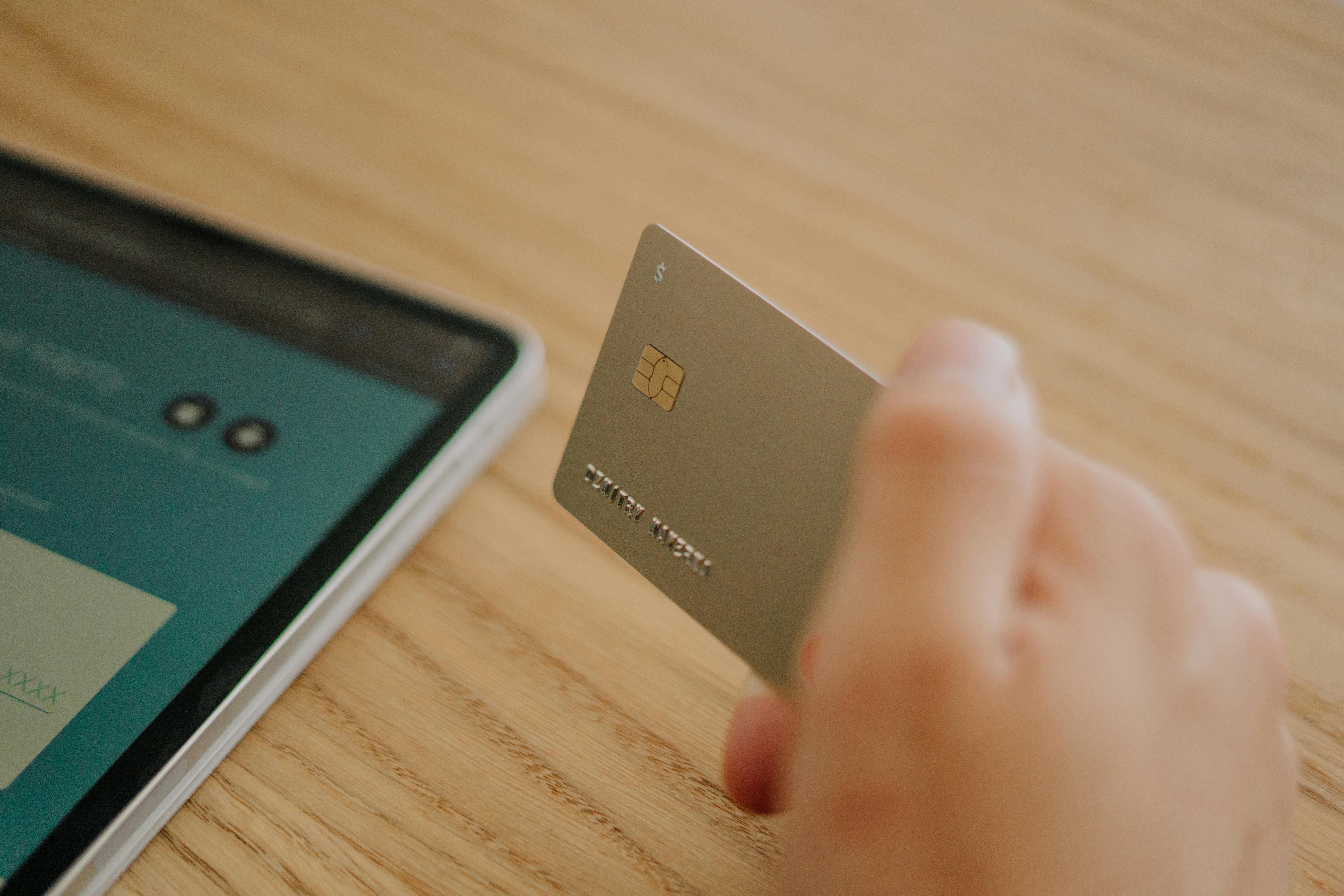
Here it is: paying rent by card only makes sense if the value you get back is higher than the fee you pay.
Say your rent is $2,000 and the portal charges a 2.9% fee. That's $58 a month, or $696 a year. If your card earns a flat 2% back — a common rate on cash back cards — you'd get $40 a month, or $480 a year. You'd be down $216 a year for the privilege of paying rent by card. Not great.
Flip it around. If your landlord charges no fee, or you use a program that waives it, even a modest 1% card turns into $240 a year of free money. The fee is almost always the deciding factor.
There are three situations where eating a fee might still be worth it.
1. You're chasing a sign-up bonus. Many rewards cards offer a big bonus — say, $200 to $750 in value — if you spend a certain amount in the first few months. If rent is the only way you'd hit that spending requirement, paying a one-time fee to unlock a big bonus can come out way ahead. (Our guide to Credit Card Sign-Up Bonuses Explained covers how these offers work.)
2. You're using a 0% intro APR card as a short bridge. If you're between paychecks and a 0% APR card lets you spread one month's rent over a few months interest-free, a 3% fee can be cheaper than a late fee, an overdraft, or a payday loan. This only works if you have a clear plan to pay it off before the intro period ends.
3. You value your points at more than face value. Some travel rewards programs let you transfer points to airline and hotel partners, where a point can be worth more than one cent. If you're an experienced points collector, a 2.5% fee on a card earning points you value at 3 cents each might pencil out. For most people, though, this is an advanced move with a lot of room for wishful thinking.
If any of these apply, skip it:
You carry a balance. Credit card interest rates in 2026 commonly sit above 20%. One month of interest on a rent-sized balance wipes out a year of rewards.
Your credit utilization would spike. Utilization is the share of your credit limit you're using. Dropping $2,000 on a card with a $5,000 limit pushes you to 40%, which can temporarily ding your score — bad timing if you're about to apply for a car loan or mortgage. See What Is Credit Utilization and Why Does It Matter? for more.
The fee is higher than your rewards and you have no bonus to chase. That's just paying extra for rent.
Priya and Marcus each pay $1,800 a month in rent.
Priya's apartment portal charges 2.95% for card payments, which works out to about $53 a month. She has a card that earns 1.5% cash back, so she'd get $27 back. Paying by card would cost her roughly $26 a month, or $312 a year. Priya sticks with a free bank transfer (ACH) for rent and uses her card for everyday spending instead.
Marcus just opened a new rewards card with a bonus worth about $600 if he spends $4,000 in three months. His normal spending is only about $700 a month, so he'd fall short. He decides to pay two months of rent by card through a third-party service at a 2.5% fee — $45 each time, $90 total. Those two payments ($3,600) plus his regular spending easily clear the $4,000 target. He nets roughly $510 after fees, plus the regular points on the rent charges. He pays the card in full both months and goes back to ACH for rent in month three.
Same rent, same fee structure — different answer, because Marcus had a bonus on the line and Priya didn't.
Forgetting the fee is charged every single month. A $50 fee feels small once. Twelve times a year, it's $600.
Letting the balance roll over. The whole strategy collapses the moment you pay interest. If you can't pay the full statement balance, don't do it.
Ignoring how the charge codes. Some third-party payment services code as regular purchases; others might code as something else. If a charge ever codes as a cash advance, you'd pay a higher APR with no grace period and no rewards. Check your first statement closely.
Paying late because of processing time. Third-party services often mail a check or send a transfer that takes several business days. Schedule the payment early so you don't trade points for a late fee from your landlord.
Assuming a rent-rewards program will stay the same. Rent-focused card programs have changed their rules several times in recent years. What was free last year might not be free now.
Find your actual fee. Log into your rent portal or ask your property manager what they charge for card payments.
Compare it to your card's earn rate. If the fee is higher and you don't have a bonus to hit, stop here and use ACH.
Check your credit limit. Make sure one rent payment won't push your utilization above about 30% right before a big application.
Set up a reminder to pay the card in full. Autopay for the full statement balance is the safest option.
Revisit every few months. Fees, bonuses, and programs change. If your landlord ever drops the fee, the math improves instantly. And if your lease is up soon, it's also worth reading How to Negotiate Your Rent Before Renewal in 2026 — lowering the rent itself beats any rewards trick.
Paying rent with a credit card is a tool, not a hack. For most people paying a standard 2.5% to 3% fee on a card that earns 1% to 2% back, it's a small, steady money loser. It turns into a winner when the fee is zero, when you're using rent to unlock a big sign-up bonus, or when you need a short-term bridge on a 0% card with a firm payoff plan. Do the one-line math — fee versus rewards — before you swipe, and always pay the balance in full.
This article is for general educational purposes only and isn't financial advice. Card terms, fees, rewards, and rent payment programs change frequently; always confirm current details with the issuer or payment provider before making decisions.
Join the newsletter your bank hates and your wallet loves.
No spam. Unsubscribe anytime.