
Cash advances feel like fast money, but hidden fees, no grace period, and higher APRs make them one of the most expensive ways to borrow. Here's what to use instead.

You're standing at an ATM at 11pm, rent is due tomorrow, and your checking account has $40 in it. Your credit card is sitting right there in your wallet, and the machine is offering to spit out cash against it. It feels like free money. It is almost never free money — a credit card cash advance is one of the most expensive ways to get your hands on a hundred dollars, and most people don't find out how expensive until the statement shows up.
A cash advance is when you use your credit card to get cash instead of paying for goods or services — withdrawing money at an ATM, getting cash back at a bank counter using your credit card, buying a money order, or even certain "cash-like" transactions such as buying casino chips or cryptocurrency with your card. It's different from a normal purchase in three important ways: the interest rate is usually higher, interest starts accruing immediately with no grace period, and there's almost always an upfront fee just for the privilege of doing it.
Most cards charge a cash advance fee of either a flat amount (say $10) or a percentage of the amount withdrawn (commonly 3-5%), whichever is greater. So pulling out $300 might cost you $15 the moment the transaction posts, before a single day of interest has even accrued.
On a regular purchase, if you pay your statement balance in full by the due date, you owe zero interest — that's the grace period doing its job. Cash advances don't get a grace period. Interest starts compounding from the day of the transaction, not from the end of the billing cycle. And the APR on cash advances is typically several points higher than your purchase APR, often landing in the 25-29% range even for people with decent credit.
Put those two things together — no grace period plus a higher rate — and a $300 cash advance sitting on your card for even three weeks before you pay it off can easily cost $25-35 in fees and interest combined. Do that every month and it adds up to real money leaking out of your budget for no reason other than convenience.
There's a quieter cost too. Cash advances count against your credit limit just like purchases do, so pulling cash can spike your credit utilization ratio overnight — one of the bigger factors in your credit score. If you want the fuller picture of how utilization moves your score, it's worth reading through Understanding Your Credit Score in 2026, because a cash advance can do damage there even if you pay it off before it accrues much interest.
If you're short on cash, there are almost always cheaper options than a card's cash advance feature. A personal line of credit or a low-interest personal loan from your bank or credit union will typically beat cash advance APRs by a wide margin. If the real problem is that your card balance itself is what's crushing you, a balance transfer to a card offering an introductory 0% period can buy you real breathing room — see our 0% APR cards roundup for options. And if a friend or family member can front you cash interest-free, swallowing the awkwardness is almost always cheaper than the advance.
Overdraft protection linked to a savings account, or even a modest buffer in a linked savings account, will usually cost you nothing or close to it compared with the double-digit fees a cash advance can carry.
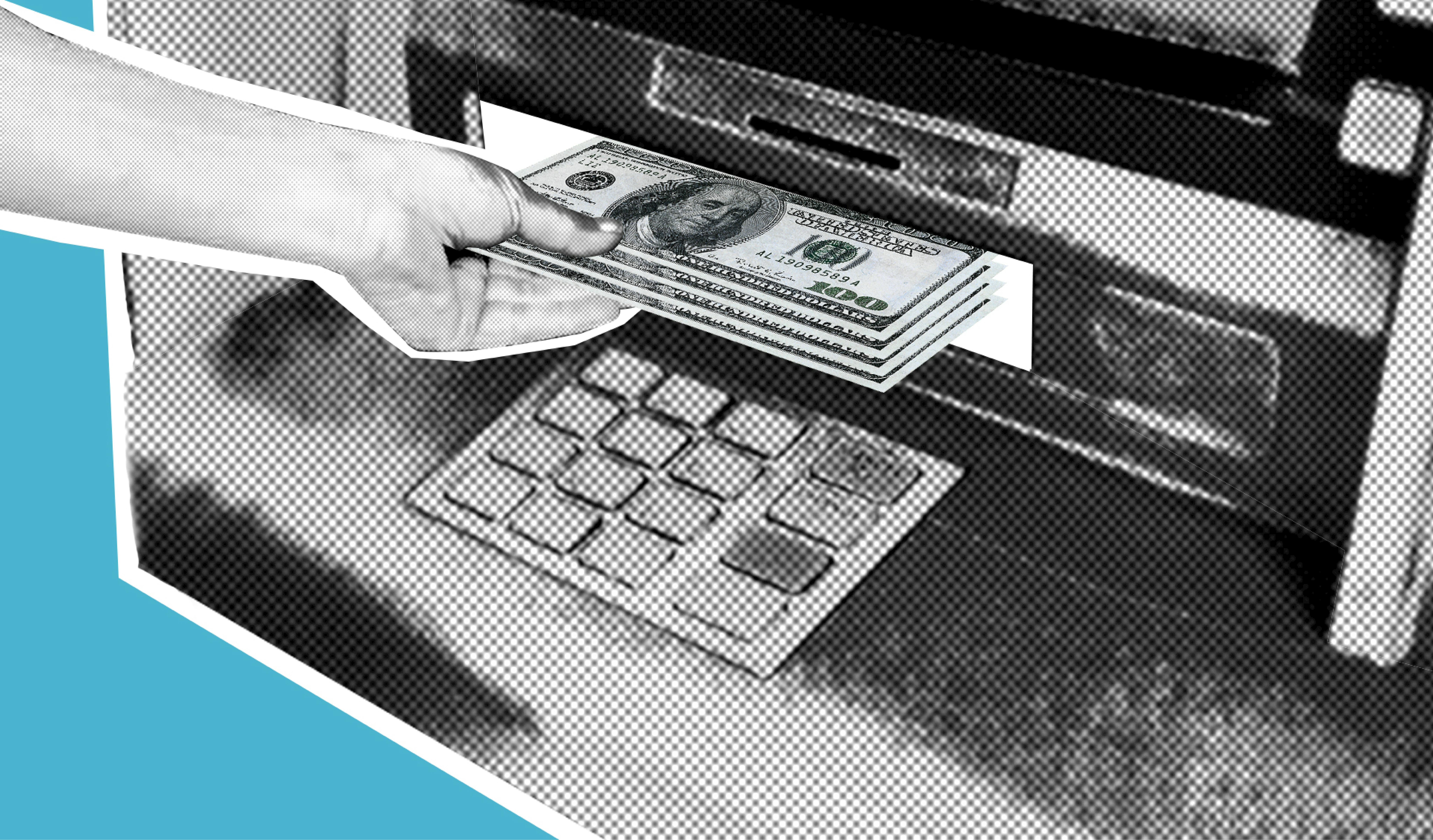
It's worth knowing that "cash advance" is a broader category than most people assume. Beyond straightforward ATM withdrawals, many issuers also classify these as cash-equivalent transactions: buying foreign currency, wiring money through a service using your credit card, loading funds onto a prepaid debit card, purchasing lottery tickets or casino chips, and in some cases certain peer-to-peer payment app transfers funded by a credit card rather than a bank account. The exact list varies by issuer, and it's genuinely buried in the fine print of your cardholder agreement rather than obvious at the point of purchase, which is part of why so many people get surprised by a cash advance fee on a transaction that didn't feel like "getting cash" at all.
This matters because peer-to-peer apps have made it easier than ever to accidentally trigger a cash advance without realizing it. Funding an app transfer with a credit card, rather than linking a bank account, can sometimes be coded as a cash advance by your card network even though you never touched an ATM. If you regularly send money to friends or family that way, it's worth confirming with your specific card issuer how those transactions are classified before it becomes an expensive surprise on your next statement.
Beyond the utilization hit mentioned above, a pattern of frequent cash advances can also be a flag that credit card issuers and lenders sometimes weigh when evaluating you for future credit, since it can read as a signal of cash flow stress rather than routine spending. It's not usually a single make-or-break factor the way a missed payment is, but combined with a high utilization ratio, it can make the difference between an approval and a decline on a future application, or between the best available interest rate and a middling one.
Dana had a car repair bill of $450 come up two days before payday, and $60 in checking. She used her credit card's cash advance feature at an ATM near the repair shop, not realizing the card charged a 5% cash advance fee ($22.50) plus a 27.99% APR with no grace period. She paid it off seventeen days later when her next paycheck came in — but by then she owed $22.50 in fees plus about $6 in accrued interest, roughly $28.50 total to borrow $450 for barely two and a half weeks.
Her coworker Priya faced almost the identical problem — a $500 emergency vet bill — the same month. Instead of a cash advance, Priya used a 0% intro APR balance transfer offer she already had on a second card, moving $500 onto it and paying it back over six weeks with zero interest and zero fee, because the offer covered both transfers and had no cap she'd have hit at that amount. Same emergency, same timeline, and Priya paid $28.50 less than Dana for solving an identical problem.
People assume a cash advance works like a regular purchase, so they don't rush to pay it back — not realizing interest is already running the moment the ATM spits out the bills. Others don't check their card's specific cash advance APR and fee structure until after they've already pulled money out, when the terms are non-negotiable. A common one: using a credit card's checks (sometimes called "convenience checks") mailed by the issuer, without realizing those almost always count as cash advances too, even though they look like an ordinary check. And some people use a cash advance to pay off a different high-interest debt, effectively trading one expensive balance for a slightly different expensive balance instead of solving the underlying cash flow problem.
Check your card's specific cash advance fee and APR in your card agreement before you ever use the feature — it varies a lot between cards.
If you must take a cash advance, pay it back as fast as humanly possible since there's no grace period working in your favor.
Before reaching for cash advance, price out a personal loan, a line of credit, or a balance transfer — nearly all of them are cheaper.
Avoid convenience checks that come in the mail with your statement; they're usually cash advances in disguise.
If cash advances are a recurring pattern for you, that's usually a signal to build a small emergency cushion so you're not relying on the most expensive form of credit you have access to.
A cash advance can feel like the fastest way out of a short-term cash crunch, but the combination of upfront fees, no grace period, and elevated interest rates makes it one of the priciest ways to borrow money that most people already carry in their wallet. If you're facing a genuine emergency, it's worth spending five minutes comparing a personal loan, a line of credit, or a 0% balance transfer offer before you ever tap that ATM button — the math almost always favors the alternative. And if you're already carrying card debt that got expensive fast, our guide on how to pay off credit card debt walks through five methods that don't involve digging the hole any deeper.
This article is for general educational purposes and shouldn't be taken as personalized financial advice. Card terms, fees, and APRs vary by issuer and by your individual creditworthiness — always check your specific card agreement and consider talking with a licensed financial advisor before making borrowing decisions.
Join the newsletter your bank hates and your wallet loves.
No spam. Unsubscribe anytime.
